Endemic
Il-Widnet il-Baħar
Malta's national plant, clinging to a few west-facing sea cliffs.
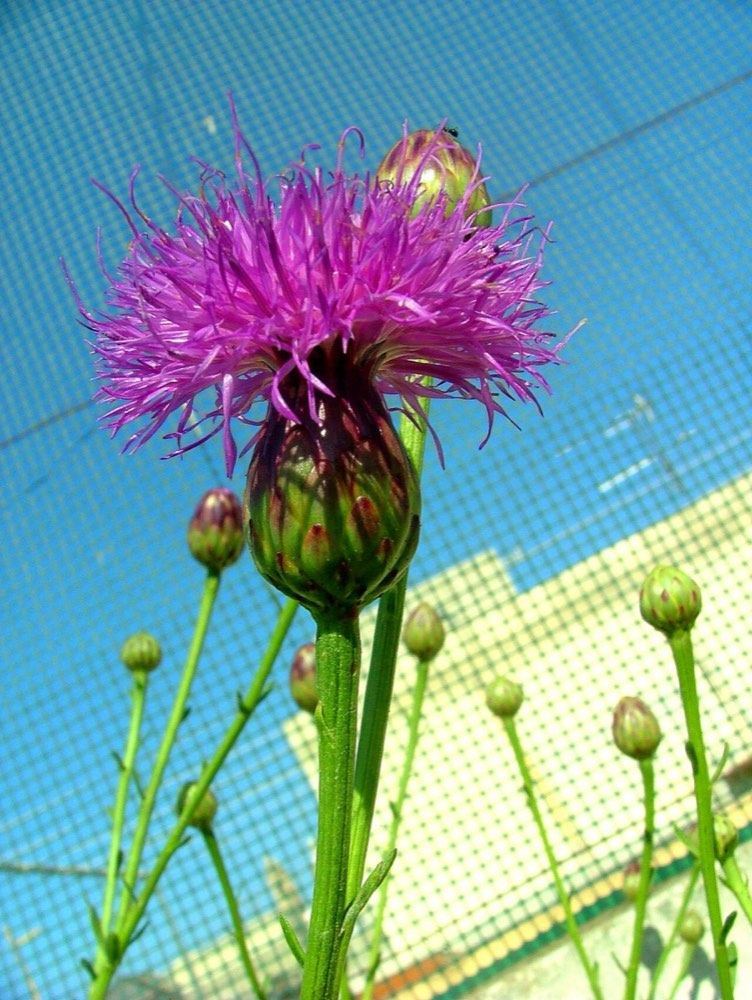
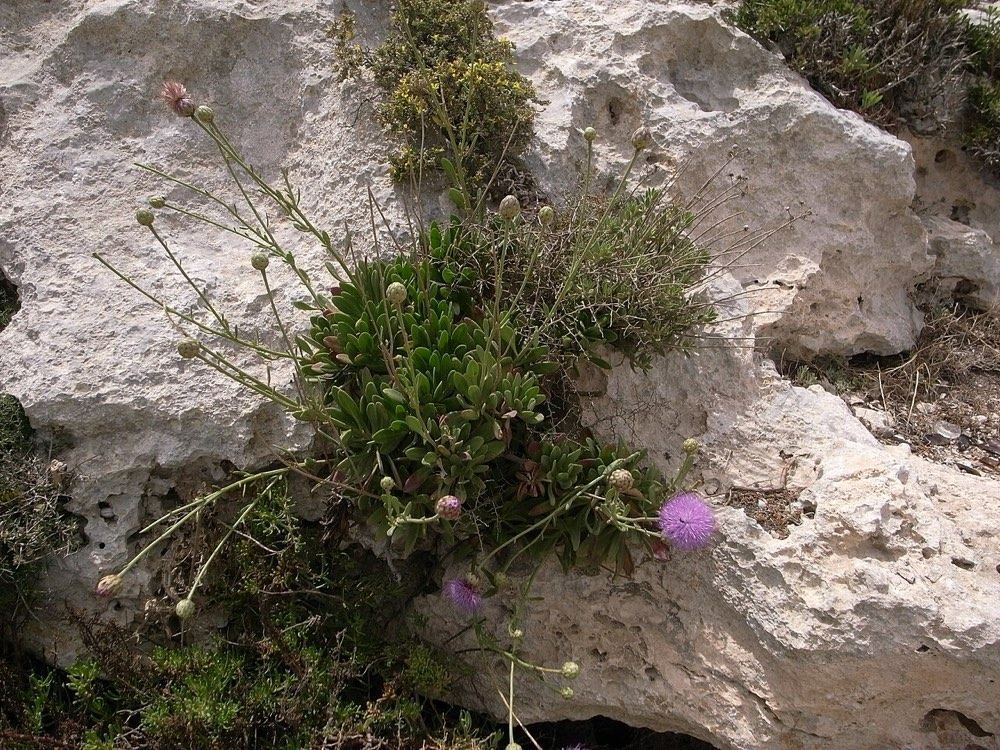
The Maltese Rock-centaury (Il-Widnet il-Baħar) is Malta's national plant, a stunning endemic wildflower found only on the Maltese islands, clinging to a few west-facing sea cliffs in precarious populations.
Description
The Rock-centaury is a perennial herb in the daisy family (Asteraceae) with distinctive purple and pink flower heads. It reaches 10–30 cm in height and flowers in late spring and early summer (May to July).
Endemic status
The species is entirely endemic to the Maltese islands, making it irreplaceable. Only a handful of populations remain, mostly on cliffs in the south-west, including sites near Dwejra, Mtaħleb and Mellieħa.
Habitat
It grows on north-facing limestone cliffs with thin soil, where it has adapted to strong winds, salt spray and nutrient-poor conditions. Wind pollination is its primary reproductive strategy.
Conservation challenges
Cliff-top development, invasive plant species, and illegal collection threaten the few remaining populations. Global climate change and increased visitor pressure to coastal areas pose additional risks.
Protection status
The species is fully protected under Maltese law. It features prominently in conservation strategies by Heritage Malta, ERA Malta and international botanical institutions.
Why it matters
The Rock-centaury is a symbol of Malta's unique biodiversity and the urgent need for cliff protection.
Threats
Development and urbanisation of cliff-top areas; invasive alien plants competing for space; illegal collection and picking; visitor pressure on accessible populations; climate change and sea-level rise.
How to help
Never pick or dig up wild plants. Do not collect seeds without authorisation. Report illegal collection to ERA Malta. Support cliff protection initiatives. Take only photographs.
Photo: Denis Barthel ( talk ), CC BY-SA 3.0.