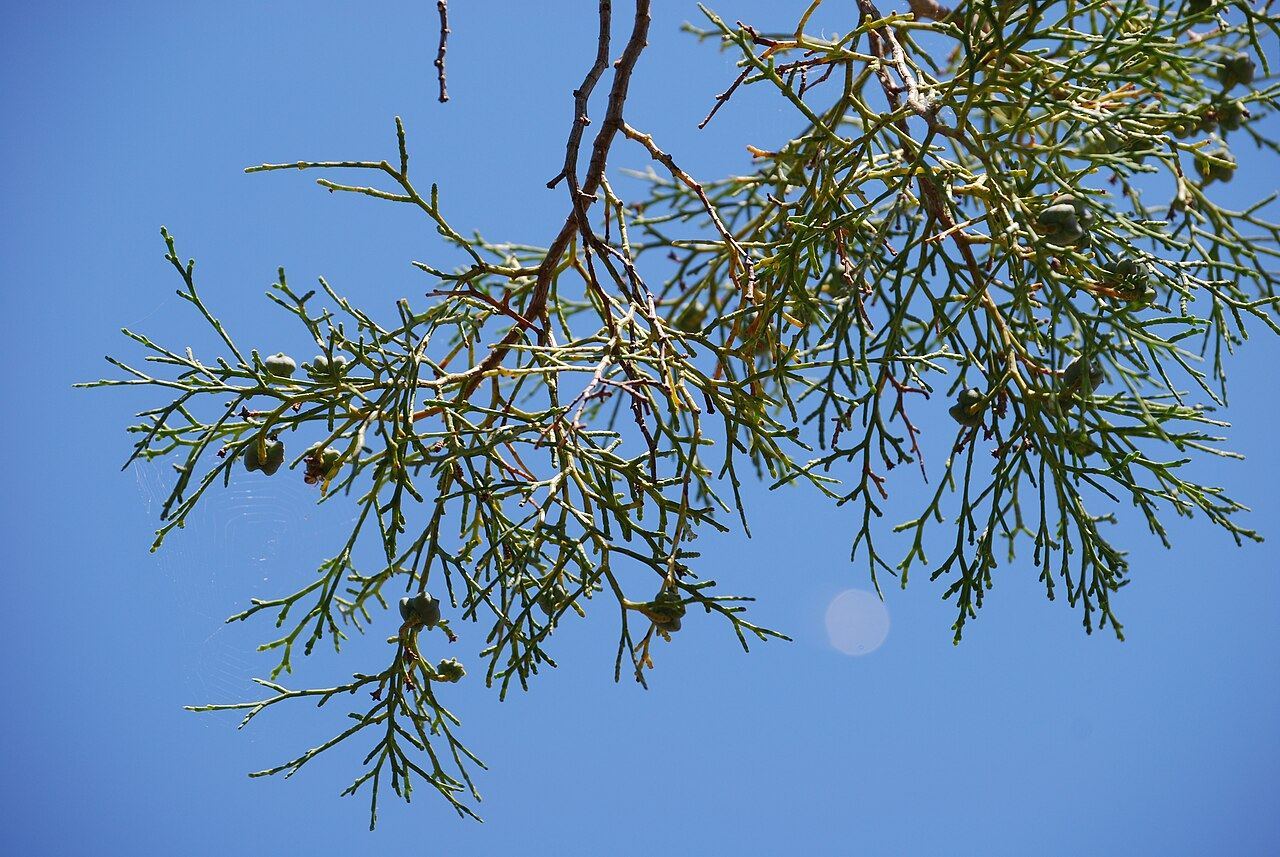
Malta's national tree, a slow-growing conifer surviving in a few wild stands.
The Sandarac Gum Tree (Is-Siġra tal-Għargħar) is Malta's national tree, a rare and slow-growing conifer native to North Africa, south-east Spain and Malta, now surviving in only a few wild stands.
Natural range and rarity
The Għargħar (Tetraclinis articulata) is a relict species from a warmer, wetter Mediterranean climate of the past. It occurs naturally in only a handful of locations worldwide, making each population precious.
Uses and history
The resin was traditionally used as a varnish for wood. The timber is dense and fragrant. In North Africa it remains valuable, but wild trees everywhere have become rare.
Maltese populations
Only a few wild Għargħar trees remain in isolated valleys in southern Malta. These survivors are monuments to prehistoric forests that once covered the islands.
Growth and lifespan
The tree grows very slowly, taking many decades to reach maturity. Individual trees may live for several hundred years.
Threats and conservation
Wild populations face threat from very limited natural recruitment, meaning few young trees establish themselves. Fire, grazing, and collection for timber have historically reduced numbers. Conservation efforts now focus on protecting remaining wild trees and supporting nursery propagation.
National symbol
The Għargħar was adopted as Malta's national tree because it represents resilience, longevity and the islands' unique natural heritage.
Threats
Very limited wild regeneration; fire; historical timber collection; grazing; invasive competing plants; climate change and drought stress.
How to help
Support native tree planting and reforestation projects that include Għargħar restoration. Never collect seeds or timber from wild trees without permission. Protect areas where wild trees grow.
Photo: Cs california, CC BY-SA 3.0.