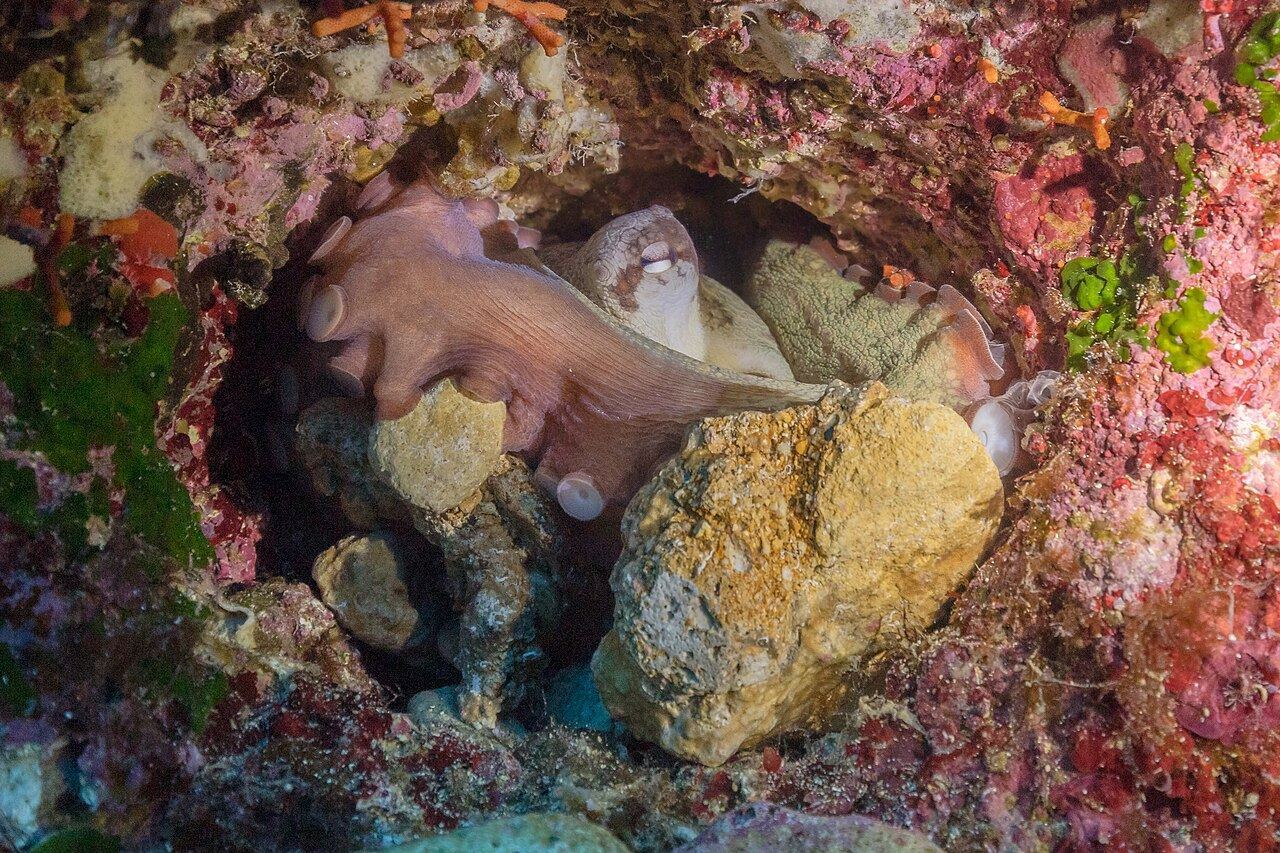
The common octopus (Octopus vulgaris) is an intelligent and adaptable animal found around Malta’s rocky reefs, sandy seabeds and seagrass beds. It hunts mainly at night and can change its colour, skin texture and body shape to hide from predators and surprise its prey. Although it is still found in Maltese waters and is locally important as food, sustainable fishing and protection of marine habitats are essential because the species has a short life cycle and is sensitive to fishing pressure.
The common octopus (Octopus vulgaris) is a highly intelligent marine animal found throughout the Mediterranean Sea, including around Malta. It lives mainly on rocky and sandy seabeds, where it uses its ability to change colour and texture to camouflage itself. Although the species is classified globally as Least Concern, local populations should still be protected. Overfishing, damage to seabed habitats, pollution and the effects of climate change may reduce octopus numbers in some areas. Sustainable fishing practices and protection of marine habitats are important for its long-term survival.
Threats
The common octopus is not currently considered globally endangered, but Mediterranean populations face several local pressures: • Overfishing and the capture of undersized octopuses. • Damage to rocky seabeds, reefs and seagrass habitats. • Marine litter, plastic and chemical pollution. • Rising sea temperatures and climate-related changes in prey availability. • Unsustainable fishing during breeding and spawning periods
How to help
Buy octopus and other seafood only from legal, traceable and responsible sources. • Avoid undersized octopus and ask fishmongers or restaurants about the origin and fishing method. • Respect Marine Protected Areas and never remove marine animals, rocks or shells from protected sites. • Do not anchor on seagrass meadows; use designated mooring areas where available. • Reduce single-use plastics, take rubbish home and join coastal clean-ups. • Never leave fishing line, hooks, nets or plastic equipment in the sea. • Report suspected illegal fishing, abandoned fishing gear or serious marine pollution to the relevant Maltese authorities. • Support local conservation groups, marine research and responsible dive or boat operators.
Photo: Diego Delso, CC BY-SA 4.0.