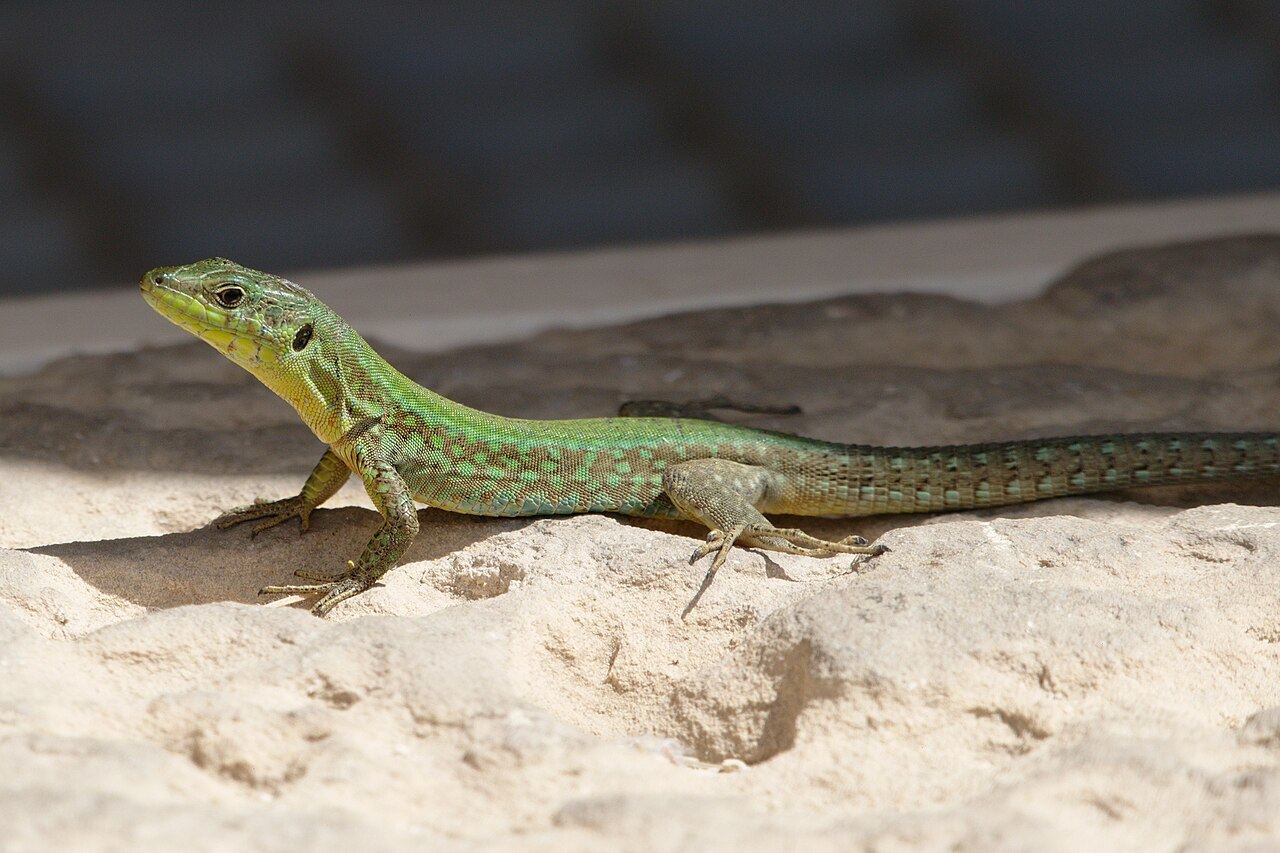
A lizard found only on the Maltese islands and the Pelagie islands, with different colour forms on each islet.
The Maltese Wall Lizard (Il-Gremxula) is found only on the Maltese islands and the nearby Pelagie islands. Different populations on isolated islets have evolved distinct colours and patterns, making them among Europe's most interesting reptiles.
Distribution and colour forms
The species is endemic to a small area of the central Mediterranean. The mainland populations (Malta and Gozo) differ from islet populations such as those on Filfla and Selmunett. Filfla lizards are notably darker, while others show distinct colour morphs.
Size and behaviour
Wall lizards measure 15–20 cm in total length. They are sun-loving (heliophilic) and active during the day, hunting insects and spiders. They climb rocks and old walls with ease.
Habitat
The lizards prefer rocky, garigue habitats with good sun exposure. They shelter in crevices and under rocks.
Threats and conservation
Lizard populations on small islets face threats from feral cats and rats, introduced predators that prey on eggs and juveniles. Development and habitat loss on the mainland continue to reduce suitable habitat.
Observation tips
Look for them on sunny days in rocky areas, especially south-facing slopes. They are quick and may disappear rapidly into crevices.
Threats
Feral cats and rats on islets preying on lizards and eggs; habitat loss through development and quarrying; human disturbance in sensitive areas; climate change affecting microhabitats.
How to help
Never pick up or handle wild lizards. Leave suitable lizard habitat undisturbed. Support efforts to control feral cats and rats on nature reserves. Do not collect lizards as pets.
Photo: Tranceliner, CC BY-SA 4.0.