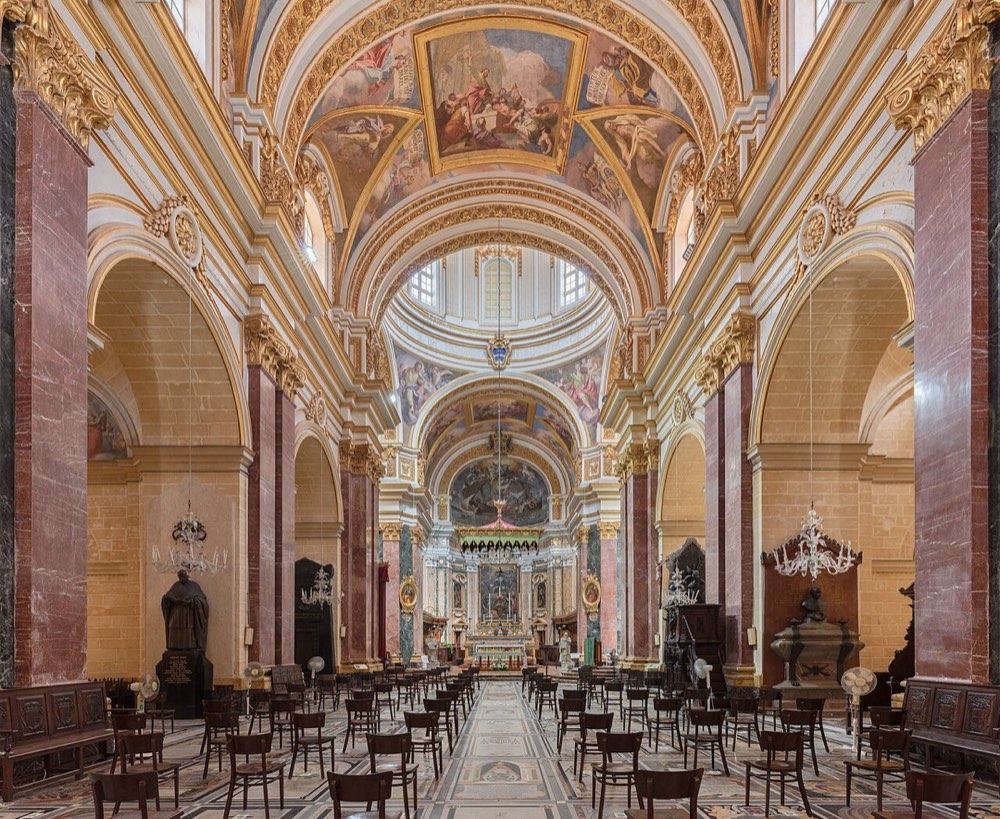
Arab rule leaves its mark on the Maltese language; Norman Sicily brings the islands into medieval Europe.
Key dates
From 870 to 1530, Malta was ruled by Arabs, then Normans and their successors, a period of profound cultural and linguistic change that established the foundations of modern Maltese identity.
Arab conquest and settlement (870–1091)
In 870, Arab forces (Aghlabids) from North Africa conquered Malta, ending Byzantine control. Arab settlement was extensive: place names such as Imdina (from Medina, "the city"), Mellieħa, Siġġiewi and others derive from Arabic. More profoundly, the Arabic language spoken in medieval Malta is the root of modern Maltese, making it the only Semitic language written in the Latin alphabet.
Linguistic legacy
Arabic remains embedded in Maltese vocabulary: common words for bread (ħobż), water (ilma), light (dawl), and hundreds of place names are directly from Arabic, even as Italian and English borrowings accumulated later.
Norman arrival (1091–1300s)
Count Roger of Normandy, leading the Christianisation of Sicily, arrived in Malta in 1091 and incorporated the islands into the Norman Kingdom of Sicily. From this point, Malta's cultural and religious orientation returned decisively to Christian Europe, though Arab-Norman co-existence continued for generations.
Medieval period (1091–1530)
For more than four centuries, Malta followed the fortunes of Sicily, passing under Swabian, Angevin (French) and Aragonese (Spanish) rule. Mdina remained the fortified capital, seat of bishops and nobles.
Feudalism and agriculture
The feudal system brought landholding nobility and a structured, if often exploitative, agricultural economy based on wheat, barley, carob and cotton.
End of the medieval period
By 1530, Ottoman pressure and shifting Mediterranean power balances prompted the Spanish Hapsburgs to grant Malta to the Order of St John.
Watch
Malta: The Ancient Island That Time Forgot
TRUE GLOBE
A broad travel-history documentary covering the temples, Phoenicians, Romans, Arabs, the Knights of St John, British influence, Valletta and the Great Siege.
Watch on YouTube ↗These videos are on YouTube. Nothing is loaded from YouTube until you press play. Videos are in English.
Photo: Diego Delso, CC BY-SA 4.0. All photo credits