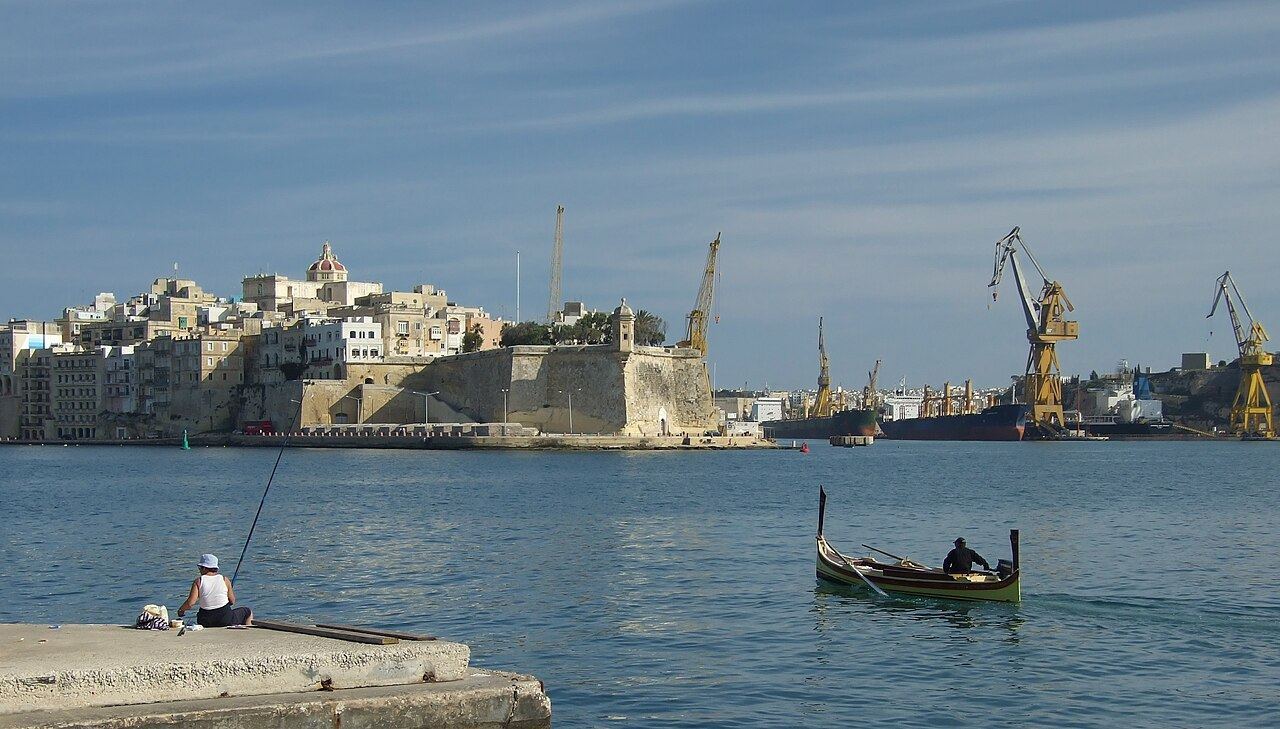
The Order of St John rules Malta for 268 years, survives the Great Siege and builds Valletta.
Key dates
For 268 years (1530–1798), the Order of St John transformed Malta into a military fortress and cultural jewel, surviving the greatest Ottoman siege in Mediterranean history and building Valletta, one of the Mediterranean's most spectacular capitals.
Arrival of the Order (1530)
The Order of St John—a religious and military monastic order—had been driven from Rhodes by Ottoman Sultan Suleiman in 1522. In 1530, Holy Roman Emperor Charles V granted them Malta, Gozo and Tripoli as compensation and to use as a base against Ottoman expansion.
Fortification of the Grand Harbour
The Order immediately recognised the strategic importance of Malta's harbours. They built a network of forts, bastions and coastal towers, transforming the islands into an impregnable fortress. Fort St Elmo, the Sceberras fortifications, Birgu and Senglea all received massive reinforcement.
The Great Siege of 1565
In May 1565, Ottoman Sultan Suleiman sent a massive invasion fleet of around 200 ships and 30,000 troops to capture Malta and eliminate the Order as a regional threat. The Knights, numbering only several hundred, alongside Maltese militia soldiers, prepared for the assault.
### The siege unfolds
Fort St Elmo, the first target, held for 31 days (May 23–June 23) before falling. Across the harbour, Birgu and Senglea faced waves of assaults through July and August. The defenders, inspired by Grand Master Jean de Valette's leadership, held firm despite overwhelming odds. A relief force from Sicily arrived on 7 September, and the Ottomans withdrew, ending one of history's most dramatic sieges.
Valletta: The New Capital (1566)
To honour Grand Master de Valette and prevent future sieges, the Order founded Valletta on the Sceberras peninsula in 1566. The new capital was designed by Italian military engineer Francesco Laparelli as a model fortress city.
### Valletta's glory
The city became a wonder of the Mediterranean: - St John's Co-Cathedral with its magnificent Baroque interior - The Grand Master's Palace, seat of the Order's supreme authority - The Auberges (headquarters buildings) of the different langues (national groups within the Order) - Fort St Angelo, guardian of the harbour - The Sacra Infermeria (hospital), one of Europe's greatest
Art and culture
The wealth of the Order brought artists and craftsmen from across Europe. Caravaggio spent time in Malta (1607–1608), creating masterpieces including "The Beheading of Saint John the Baptist" in St John's Co-Cathedral.
Trade and corsairing
The Order grew wealthy through piracy and privateering against Ottoman and Barbary shipping, as well as through legitimate trade. Malta became a prosperous entrepôt for goods moving across the Mediterranean.
Decline and dissolution
By the 18th century, the Order's power was waning. Enlightenment ideas challenged its religious monopoly. In June 1798, Napoleon's fleet, en route to Egypt, arrived at Malta. The Order, no longer the martial force it had been, surrendered without significant resistance. French rule lasted two years before British forces expelled them.
Legacy
The Order left Malta transformed: a fortified, Europeanised island with a cosmopolitan capital, Christian faith renewed, and defensive structures that lasted centuries. Valletta remains one of the Mediterranean's greatest architectural achievements.
Watch
Knights VS The Ottoman Empire: The Epic Battle for Malta
Dan Snow's History Hit
How the Knights of St John held Malta against the Ottoman Empire in the Great Siege of 1565.
Watch on YouTube ↗More videos
- The Knights of St. John: Jean de Valette and the Epic Siege of Malta ↗ · Heroes and Legends Documentary ChannelA documentary focused on Jean de Valette, the Knights Hospitaller and the Ottoman siege of 1565.
These videos are on YouTube. Nothing is loaded from YouTube until you press play. Videos are in English.
Photo: MrPanyGoff, CC BY-SA 3.0. All photo credits